
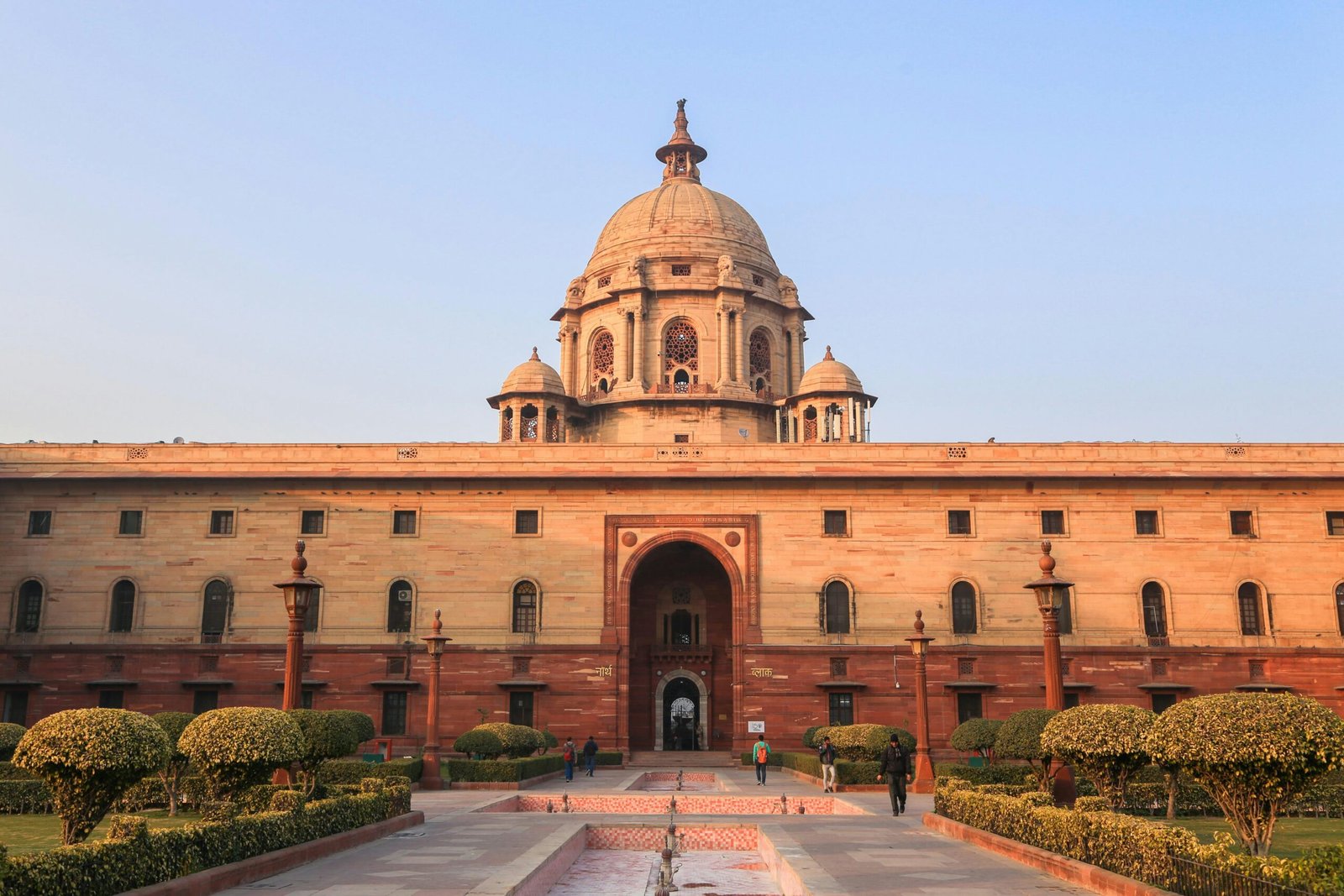
Rashtrapati Bhavan, located at the western end of New Delhi, is one of the most important and majestic buildings in India. Serving as the official residence of the President of India, it stands as a symbol of the nation’s democratic values, authority, and architectural grandeur. Spread over an area of about 330 acres, Rashtrapati Bhavan is not only a political landmark but also a masterpiece of design and history.
Originally built as the Viceroy’s House during British rule, the building was designed by the famous British architect Sir Edwin Lutyens, in collaboration with Sir Herbert Baker. Construction began in 1912 and was completed in 1929, and the building was inaugurated in 1931. After India gained independence in 1947, it was renamed Rashtrapati Bhavan and became the residence of the President of India.
Architecturally, Rashtrapati Bhavan is a remarkable blend of European classical style and Indian architectural elements. The massive structure is built using sandstone and features grand colonnades, domes, and open courtyards. One of its most striking features is the central dome, inspired by the Buddhist stupa at Sanchi, symbolizing India’s ancient heritage. The building has over 340 rooms, including ceremonial halls, guest rooms, offices, and private living quarters.
Inside, Rashtrapati Bhavan houses several impressive halls, such as the Ashoka Hall, known for its beautiful Persian-style paintings; the Durbar Hall, used for official ceremonies and state functions; and the Banquet Hall, where formal dinners for visiting dignitaries are hosted. These halls reflect the elegance and dignity associated with the highest constitutional office of the country.
One of the major attractions of Rashtrapati Bhavan is the Mughal Gardens, now known as Amrit Udyan. Laid out in the traditional Mughal style, the gardens are famous for their symmetrical design, fountains, and vibrant flower beds. Open to the public during specific months each year, they showcase a wide variety of flowers, including roses, tulips, and seasonal blooms, drawing visitors from across the country.
Rashtrapati Bhavan plays a central role in India’s national life. It is the venue for important ceremonies such as the swearing-in of the Prime Minister, presentation of national awards, and meetings with foreign heads of state. Despite its grandeur, the building represents the principles of service, responsibility, and democracy.
Today, Rashtrapati Bhavan stands as a powerful reminder of India’s journey from colonial rule to a sovereign republic. For visitors and citizens alike, it embodies the dignity of the Indian state and the continuity of its traditions, making it one of the most significant landmarks in the country.