
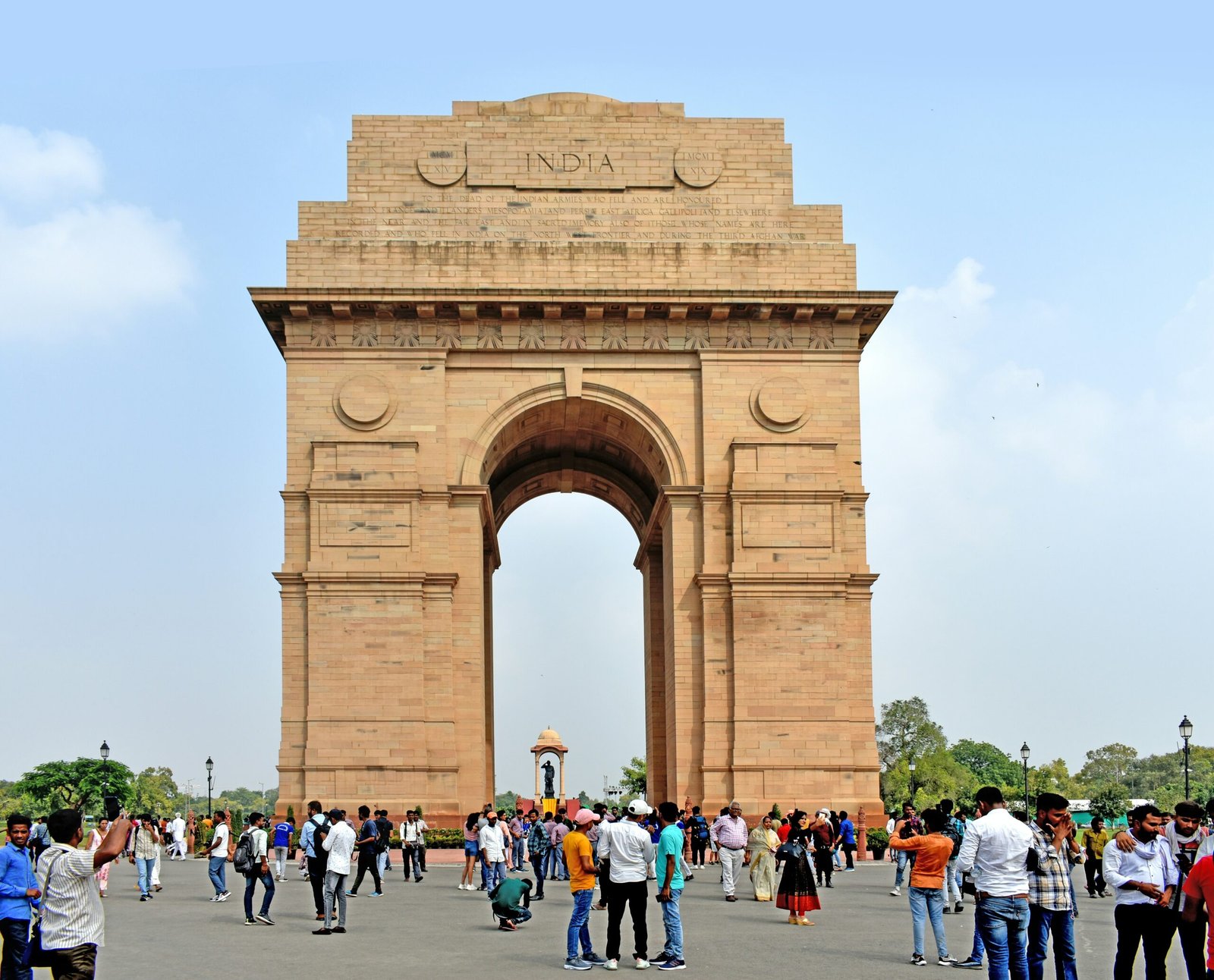
India Gate is one of the most prominent national monuments of India, standing proudly in the heart of New Delhi. It is a symbol of sacrifice, courage, and national pride, attracting millions of visitors every year. Located along the ceremonial boulevard of Rajpath (now known as Kartavya Path), India Gate serves as a reminder of the soldiers who laid down their lives in service of the nation.
Designed by the renowned British architect Sir Edwin Lutyens, India Gate was built as a war memorial to honor the Indian soldiers of the British Indian Army who died during World War I (1914–1918) and the Third Anglo-Afghan War. Construction began in 1921 and was completed in 1931. The monument bears the names of over 13,000 soldiers, inscribed on its sandstone walls, preserving their memory for generations to come.
Architecturally, India Gate is inspired by the Arc de Triomphe in Paris and stands at a height of about 42 meters. Built primarily of sandstone, the structure features a large archway with a solemn and imposing presence. At the top of the monument is the word “INDIA”, along with the dates of World War I inscribed beneath it. The simplicity of its design enhances its dignity and emotional impact.
One of the most significant features of India Gate is the Amar Jawan Jyoti (Flame of the Immortal Soldier), which was added in 1972 after the Indo-Pak War of 1971. This eternal flame, burning beneath the arch, honors unknown soldiers who sacrificed their lives for the country. Surrounded by a black marble platform and guarded by armed forces, it has become a powerful symbol of respect and remembrance. (In recent years, the flame has been ceremonially merged with the National War Memorial nearby.)
India Gate is not only a place of historical importance but also a popular public gathering spot. The expansive green lawns surrounding the monument make it a favorite destination for families, tourists, and locals. In the evenings, the monument is beautifully illuminated, creating a serene and patriotic atmosphere. Visitors often enjoy leisurely walks, picnics, and views of nearby landmarks such as Rashtrapati Bhavan and the Parliament House.
National events, especially Republic Day, give India Gate special significance, as it lies along the parade route where the country showcases its cultural diversity and military strength. During such occasions, the area becomes a focal point of national celebration and unity.
India Gate stands as a timeless tribute to bravery and sacrifice. More than just a monument, it represents the spirit of India—resilient, grateful, and united. For visitors, it offers not only a glimpse into history but also a space to reflect on the values of freedom and service that define the nation.