
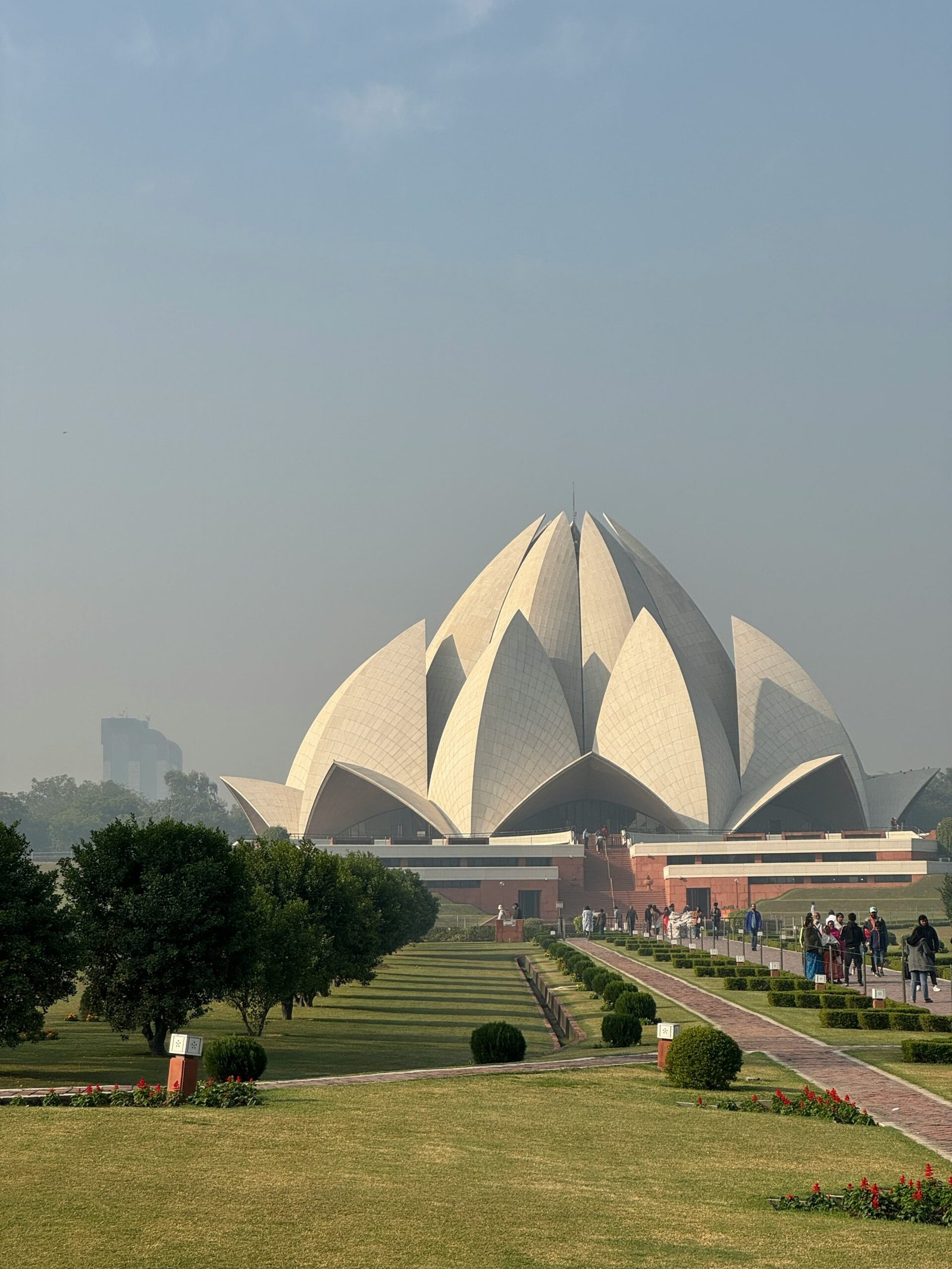
The Lotus Temple, located in New Delhi, is one of India’s most remarkable modern architectural landmarks and a symbol of peace, unity, and harmony. Officially known as the Bahá’í House of Worship, the temple is admired worldwide for its distinctive lotus-shaped design and its message of universal brotherhood. Open to people of all religions, cultures, and nationalities, the Lotus Temple welcomes millions of visitors every year, making it one of the most visited buildings in the world.
Completed in 1986, the Lotus Temple was designed by the Iranian architect Fariborz Sahba. The structure is shaped like a blooming lotus flower, a symbol deeply rooted in Indian culture, representing purity, enlightenment, and hope. The building is composed of 27 free-standing marble-clad petals, arranged in clusters to form nine sides. The number nine, significant in the Bahá’í Faith, symbolizes completeness and unity. The temple is surrounded by beautifully landscaped gardens and tranquil pools, enhancing its serene atmosphere.
The Lotus Temple is not dedicated to any specific deity or religious ritual. Instead, it reflects the core principle of the Bahá’í Faith, which emphasizes the unity of all religions and the oneness of humanity. Inside the prayer hall, there are no idols, images, or religious symbols. Visitors are encouraged to sit in silence, meditate, pray, or reflect according to their own beliefs. Readings from the sacred texts of different religions may be recited, but rituals, sermons, or music are not performed.
Architecturally, the Lotus Temple is a marvel of modern engineering. The white marble used in its construction was sourced from Mount Penteli in Greece, the same quarry used for the Parthenon in Athens. The temple’s innovative design allows natural light to filter through the petals, creating a calm and spiritual ambiance inside. The surrounding water bodies also help regulate the temperature and contribute to the building’s visual elegance.
Beyond its architectural beauty, the Lotus Temple has become a global symbol of peace and interfaith understanding. People from all walks of life visit the temple to experience its quiet atmosphere, away from the noise and chaos of the city. The temple has received numerous international awards for its design and has been featured in books, magazines, and documentaries worldwide.
For tourists, the Lotus Temple offers a unique experience that combines spirituality, architecture, and tranquility. Modest dress and silence inside the prayer hall are encouraged to maintain the sanctity of the space. Photography is allowed outside but restricted inside the hall.
In a diverse country like India, the Lotus Temple stands as a powerful reminder of unity in diversity. More than just a tourist attraction, it is a place of reflection and peace, inviting visitors to pause, connect, and appreciate the shared values of humanity.