
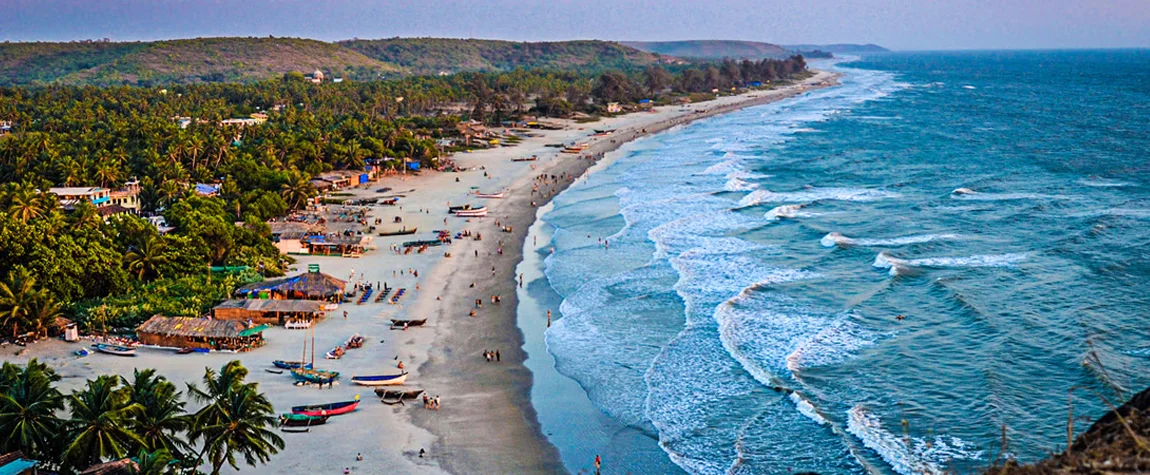
Goa is one of India’s most captivating states, known for its unique blend of natural beauty, rich history, and vibrant culture. Located on the western coast of India along the Arabian Sea, Goa may be the smallest state in the country by area, but it holds an outsized place in India’s tourism and cultural landscape. With its palm-fringed beaches, laid-back lifestyle, and colorful traditions, Goa attracts millions of visitors from India and around the world every year.
The geography of Goa is diverse and picturesque. Its long coastline is dotted with famous beaches such as Baga, Calangute, Anjuna, and Palolem, each offering a different experience. While the northern beaches are lively and known for nightlife, water sports, and markets, the southern beaches are quieter and more serene, ideal for relaxation. Beyond the coast, Goa is home to lush green hills, rivers like the Mandovi and Zuari, and dense forests that form part of the Western Ghats, a biodiversity hotspot. These natural features make Goa not only a beach destination but also a place for eco-tourism, wildlife exploration, and adventure activities.
Goa’s history sets it apart from most other Indian states. It was ruled by the Portuguese for more than 450 years, until it became part of India in 1961. This long colonial period has left a lasting impact on Goa’s architecture, religion, cuisine, and lifestyle. Old Goa, a UNESCO World Heritage Site, is famous for its magnificent churches such as the Basilica of Bom Jesus and Se Cathedral, which reflect European architectural styles blended with Indian influences. The presence of Catholicism alongside Hinduism has created a rare cultural harmony that is visible in Goa’s festivals, traditions, and daily life.
The culture of Goa is vibrant and welcoming. Music and dance play an important role, with traditional forms like Fugdi, Dhalo, and Dekhni still performed during festivals and celebrations. Goa is also known for its lively modern music scene, including trance and electronic music, which gained popularity during the hippie movement of the 1960s and 1970s. Festivals such as Carnival, Christmas, Easter, Diwali, and Shigmo are celebrated with great enthusiasm, showcasing the state’s multicultural spirit.
Goan cuisine is another highlight, deeply influenced by both Indian and Portuguese flavors. Rice and fish form the staple diet, with popular dishes like fish curry, prawn balchão, vindaloo, and sorpotel. The use of coconut, spices, vinegar, and fresh seafood gives Goan food its distinctive taste. Traditional sweets like bebinca and dodol are especially popular during festivals.
In recent years, Goa has developed beyond tourism. While tourism remains the backbone of its economy, the state has also seen growth in industries such as mining, agriculture, education, and information technology. Despite modernization, Goa has managed to retain its relaxed pace of life and strong sense of community.
In essence, Goa is a state where history meets nature, and tradition blends effortlessly with modernity. Its scenic landscapes, rich heritage, and warm hospitality make it not just a tourist destination, but a place that leaves a lasting impression on everyone who visits.
Places to Visit in Goa.
- Anjuna Beach
- Beach-2
- Beach-3
- Beach-4
Leave a Reply