
Varanasi, also known as Kashi or Banaras, is one of the oldest continuously inhabited cities in the world and the spiritual heart of India. Situated on the banks of the sacred River Ganges in the northern state of Uttar Pradesh, Varanasi holds immense religious, cultural, and philosophical significance. For centuries, it has drawn pilgrims, saints, scholars, and travelers seeking spiritual awakening, salvation, and a deeper understanding of life and death. The city’s atmosphere is intense, timeless, and deeply moving, offering an experience unlike any other place in India.
At the core of Varanasi’s identity is the River Ganges, revered by Hindus as a divine mother whose waters purify the soul. The city’s iconic ghats, a series of stone steps leading down to the river, are the focal point of daily life. From early morning, pilgrims gather at ghats such as Dashashwamedh, Assi, and Manikarnika to perform ritual bathing, prayers, and offerings. The sight of devotees lighting oil lamps, chanting mantras, and floating flowers on the river creates a deeply spiritual and visually powerful scene. Manikarnika Ghat, one of the most sacred cremation grounds in Hinduism, symbolizes the belief that dying in Varanasi grants liberation from the cycle of rebirth.
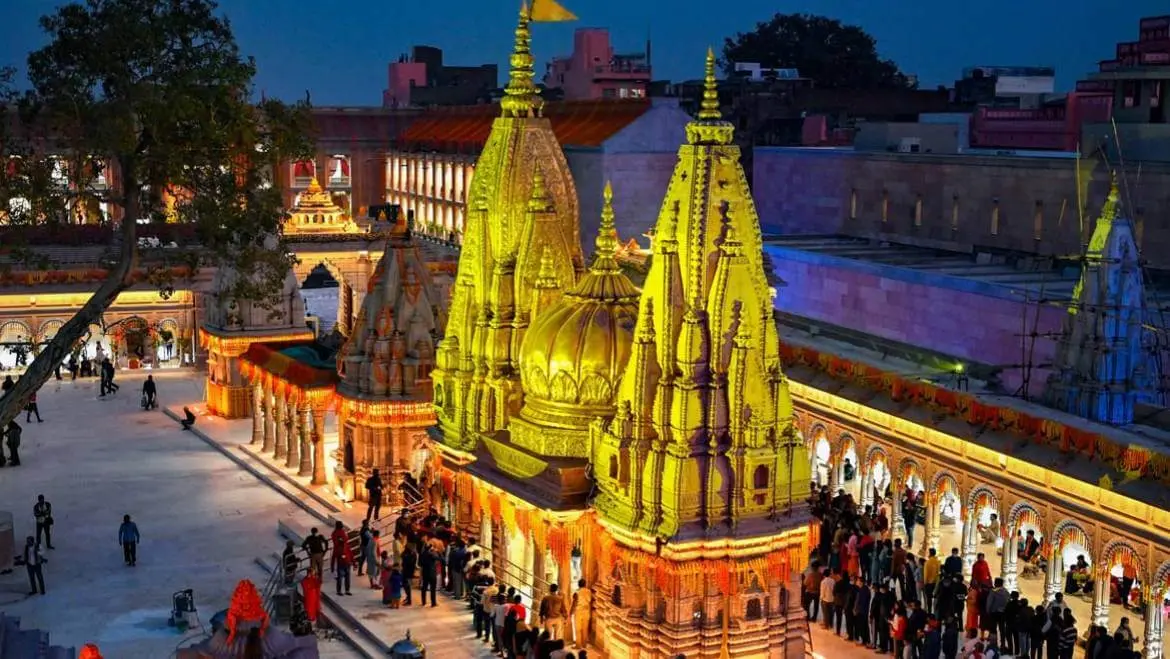
One of the most revered temples in the city is the Kashi Vishwanath Temple, dedicated to Lord Shiva, the presiding deity of Varanasi. This temple is among the twelve Jyotirlingas and holds immense importance for Hindu devotees. Pilgrims from across India visit the temple to seek blessings and experience the sacred energy that defines the city. Nearby temples and shrines fill the narrow lanes, creating a dense spiritual landscape where religion is interwoven into everyday life.
A highlight of any visit to Varanasi is the Ganga Aarti, performed every evening at Dashashwamedh Ghat. Priests dressed in traditional attire conduct an elaborate ritual using fire lamps, incense, conch shells, and synchronized chants. The ceremony, accompanied by rhythmic music and devotional hymns, draws thousands of spectators and is a mesmerizing expression of devotion and faith. Equally enchanting is a sunrise boat ride on the Ganges, offering a peaceful perspective of the ghats as the city slowly awakens.
Beyond its spiritual essence, Varanasi is also a center of learning, art, and culture. It has long been associated with classical Indian music, literature, and philosophy. The nearby town of Sarnath, where Lord Buddha delivered his first sermon after attaining enlightenment, adds to the city’s spiritual diversity and historical depth. The Banaras Hindu University (BHU), one of Asia’s largest residential universities, reflects the city’s continuing role as a hub of education and intellectual pursuit.
Varanasi is not just a destination; it is an experience that challenges, inspires, and transforms. Its sacred rituals, ancient traditions, and profound connection to life and death offer visitors a rare opportunity to witness spirituality in its most raw and authentic form. For many, a journey to Varanasi becomes a deeply personal and unforgettable encounter with the soul of India.
Leave a Reply