
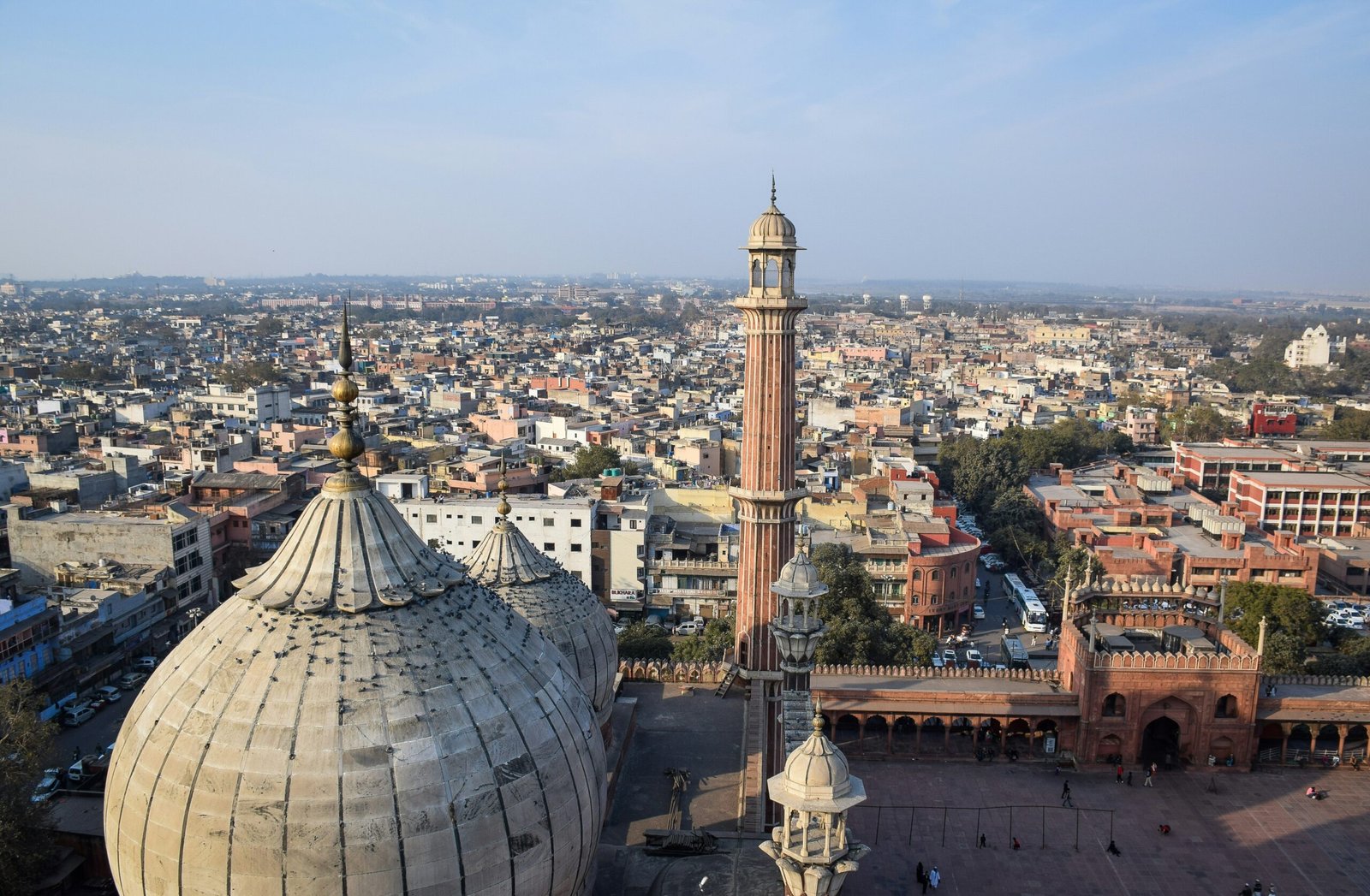
Chandni Chowk is one of the oldest and busiest markets in India, located in the heart of Old Delhi. Steeped in history, culture, and tradition, this iconic marketplace offers a vibrant glimpse into the soul of the city. With its narrow lanes, centuries-old shops, historic monuments, and irresistible street food, Chandni Chowk remains a must-visit destination for anyone exploring Delhi.
The market was established in the 17th century by Mughal emperor Shah Jahan, and it was designed by his daughter Jahanara Begum. Originally, Chandni Chowk was a broad avenue with a central canal that reflected the moonlight, which is how it earned its name—Chandni Chowk, meaning “Moonlit Square.” During the Mughal era, it served as a royal marketplace, attracting merchants from across India and beyond.
Over time, Chandni Chowk evolved into a bustling commercial hub. Today, it is famous for its specialized lanes, each known for a particular trade. Dariba Kalan is renowned for jewelry and silverware, Kinari Bazaar for wedding accessories and decorative items, Khari Baoli for spices and dry fruits, and Nai Sarak for books and stationery. These markets continue traditions passed down through generations, with many shops operating for over a hundred years.
Chandni Chowk is also a paradise for food lovers. The area is celebrated for its legendary street food, offering a wide range of flavors that reflect Delhi’s culinary heritage. Popular treats include parathas from Paranthe Wali Gali, chaat, jalebis, kachoris, and refreshing lassi. The aroma of spices, sweets, and freshly cooked snacks fills the air, making food exploration an unforgettable experience.
Apart from shopping and food, Chandni Chowk is home to several important historical and religious landmarks. The grand Jama Masjid, one of the largest mosques in India, stands nearby and dominates the skyline. The area also houses temples, gurudwaras, and churches, such as Shri Digambar Jain Lal Mandir and Gurudwara Sis Ganj Sahib, highlighting the religious diversity and harmony of the region.
Despite its chaotic appearance, Chandni Chowk functions with a rhythm of its own. Cycle rickshaws, handcarts, and pedestrians navigate the crowded streets in a lively yet organized manner. Recent redevelopment efforts have improved infrastructure while preserving the historic character of the area.
Chandni Chowk is more than just a marketplace—it is a living museum of Delhi’s history and culture. It reflects the city’s ability to blend the old with the new, tradition with modern life. For visitors, walking through Chandni Chowk is not just a shopping trip but a journey through time, offering memories filled with color, flavor, and history that linger long after the visit ends.