
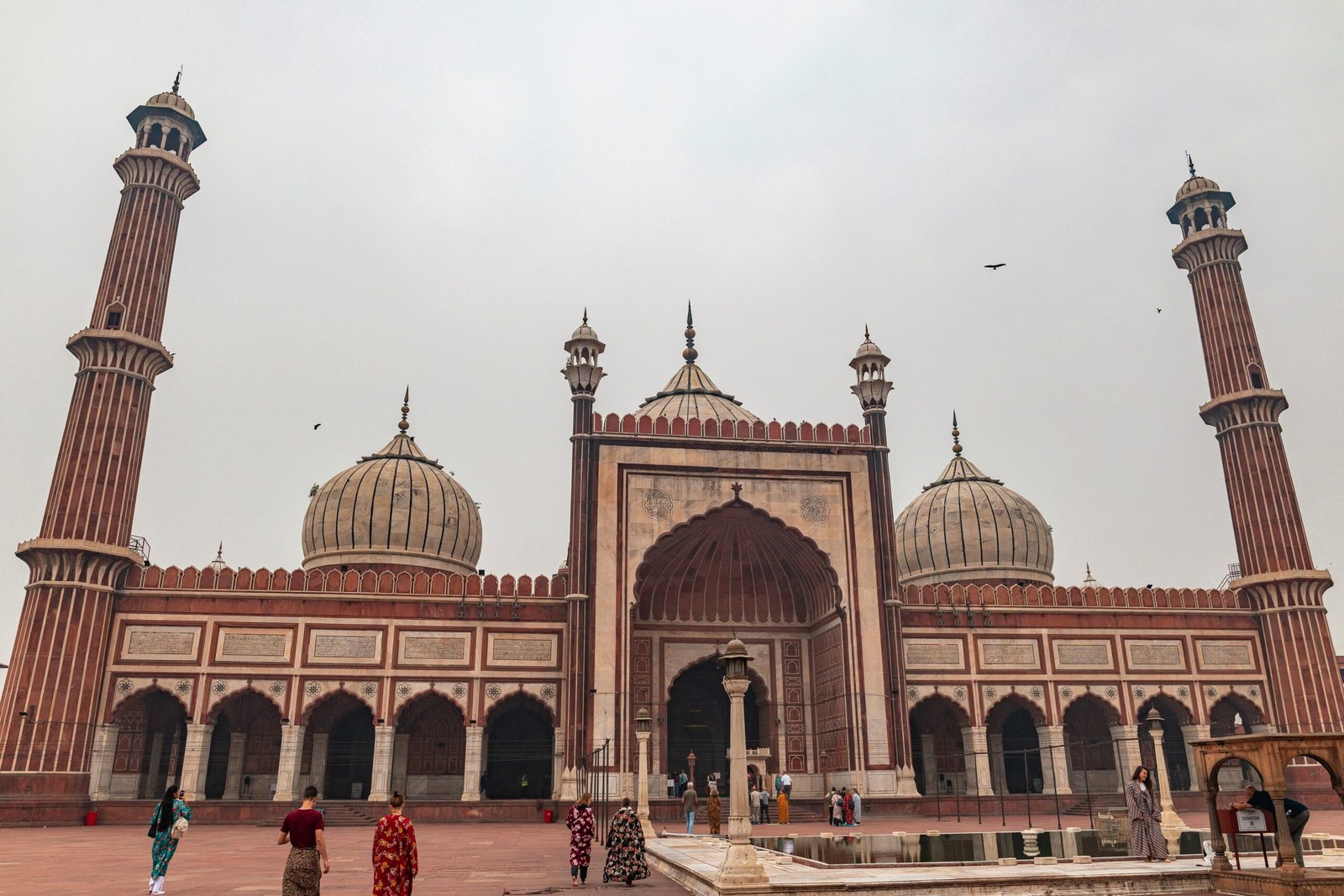
Jama Masjid, located in the heart of Old Delhi, is one of the largest and most magnificent mosques in India. Officially known as Masjid-i-Jahan-Numa (the “Mosque That Reflects the World”), it stands as a powerful symbol of Mughal architecture, religious devotion, and India’s rich cultural heritage. Built during the reign of the Mughal emperor Shah Jahan, the same ruler who commissioned the Taj Mahal, Jama Masjid remains a timeless landmark of Delhi.
Construction of the mosque began in 1644 and was completed in 1656, taking over a decade and the efforts of thousands of skilled artisans. Made primarily of red sandstone and white marble, Jama Masjid showcases the grandeur and elegance typical of Mughal design. Its vast rectangular courtyard can accommodate more than 25,000 worshippers, making it a central place of prayer, especially during Friday prayers and major Islamic festivals such as Eid-ul-Fitr and Eid-ul-Adha.
The mosque’s architecture is both imposing and graceful. Three large marble domes crown the main prayer hall, striped in black and white, while two towering minarets, each about 40 meters high, flank the structure. Visitors who climb the southern minaret are rewarded with a panoramic view of Old Delhi, where narrow lanes, bustling markets, and historic havelis stretch out in every direction. The mosque is accessed through three grand gateways, with the eastern gate traditionally reserved for royal entry.
Inside, the prayer hall features intricately carved arches, elegant calligraphy from the Quran, and a serene atmosphere that contrasts sharply with the lively streets outside. The floor is marked to resemble prayer mats, helping worshippers maintain orderly rows during prayers. Jama Masjid also houses several sacred relics believed to be associated with the Prophet Muhammad, preserved with great reverence.
Beyond its religious significance, Jama Masjid is deeply woven into the social and cultural life of Delhi. The surrounding area, especially Chandni Chowk, is famous for its street food, spice markets, and traditional shops. Visiting the mosque often becomes part of a broader exploration of Old Delhi’s history, cuisine, and everyday life.
For travelers, Jama Masjid is more than a monument—it is a living heritage site. Visitors are welcome outside prayer times, though modest dress is required, and robes are provided at the entrance if needed. Removing shoes before entering is mandatory, reflecting the sanctity of the space.
In a city where ancient and modern coexist, Jama Masjid stands as a reminder of Delhi’s glorious past and enduring spiritual traditions. Whether admired for its architectural beauty, historical importance, or tranquil ambiance, Jama Masjid remains an unforgettable experience for anyone exploring India’s capital.