
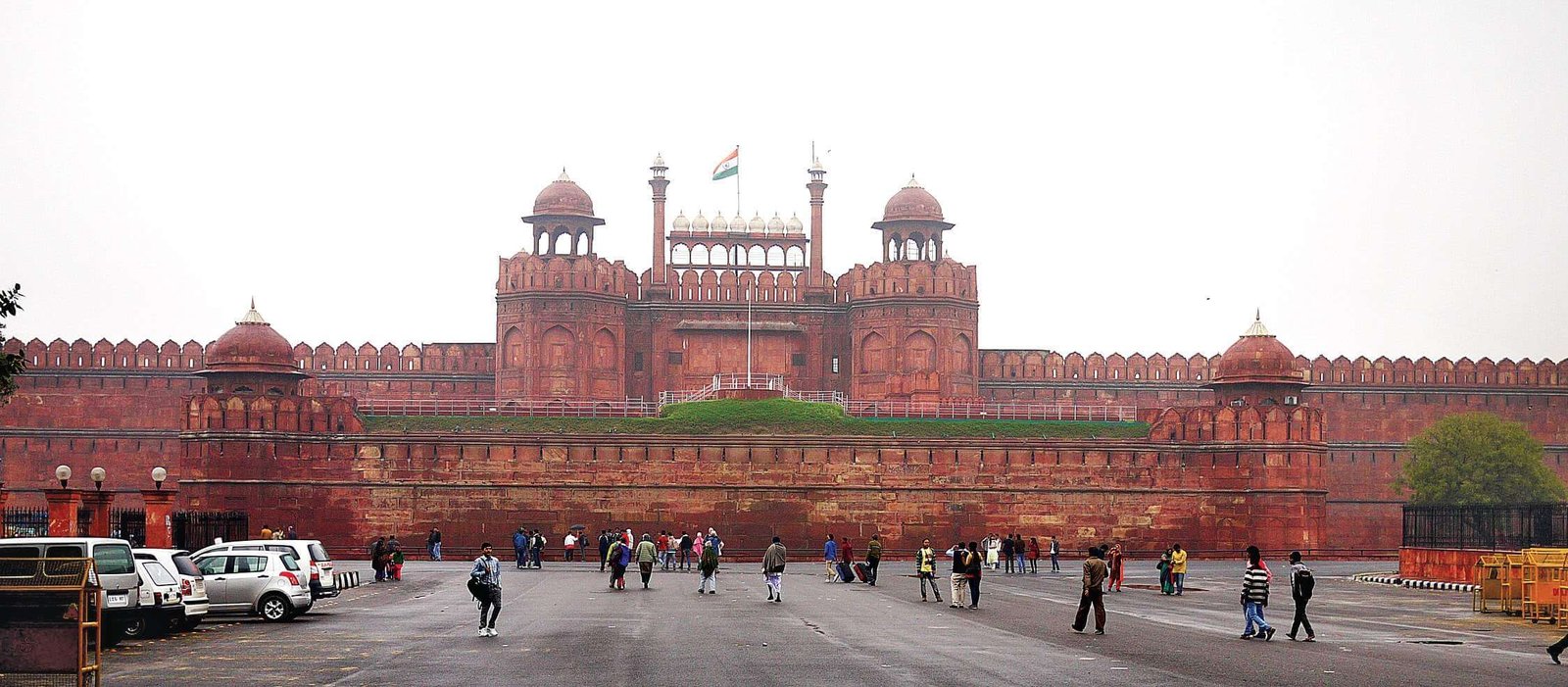
The Red Fort is one of India’s most important historical monuments and a powerful symbol of the country’s heritage.
History of the Red Fort (Lal Qila)
The Red Fort is located in Delhi, India, and was built during the Mughal period.
Construction
- The Red Fort was commissioned by Mughal Emperor Shah Jahan in 1638.
- It was completed in 1648 when Shah Jahan shifted his capital from Agra to Delhi, then known as Shahjahanabad.
- The fort gets its name from the massive red sandstone walls used in its construction.
Purpose
- It served as the main residence of the Mughal emperors for nearly 200 years.
- The fort was also the center of administration, politics, and royal ceremonies.
Architecture
- The Red Fort is a fine example of Mughal architecture, combining Persian, Timurid, and Indian styles.
- Important structures inside the fort include:
- Diwan-i-Aam (Hall of Public Audience)
- Diwan-i-Khas (Hall of Private Audience)
- Rang Mahal
- Moti Masjid (Pearl Mosque)
- A water channel called Nahr-i-Bihisht (Stream of Paradise) once flowed through the palace.
Later History
- After Aurangzeb, the Mughal Empire weakened, and the fort was invaded several times.
- In 1857, during the First War of Indian Independence, the British captured the Red Fort.
- The British used it as a military base and destroyed or altered many structures.
Role in Modern India
- On 15 August 1947, India gained independence, and the first Prime Minister Jawaharlal Nehru hoisted the national flag at the Red Fort.
- Since then, the Prime Minister hoists the national flag here every Independence Day and addresses the nation.
UNESCO World Heritage Site
- In 2007, the Red Fort was declared a UNESCO World Heritage Site for its historical and cultural significance.
Significance
The Red Fort stands as a symbol of India’s freedom struggle, rich history, and architectural brilliance.